
Whale Watching in Sri Lanka: Best Places, Best Season & What to Know
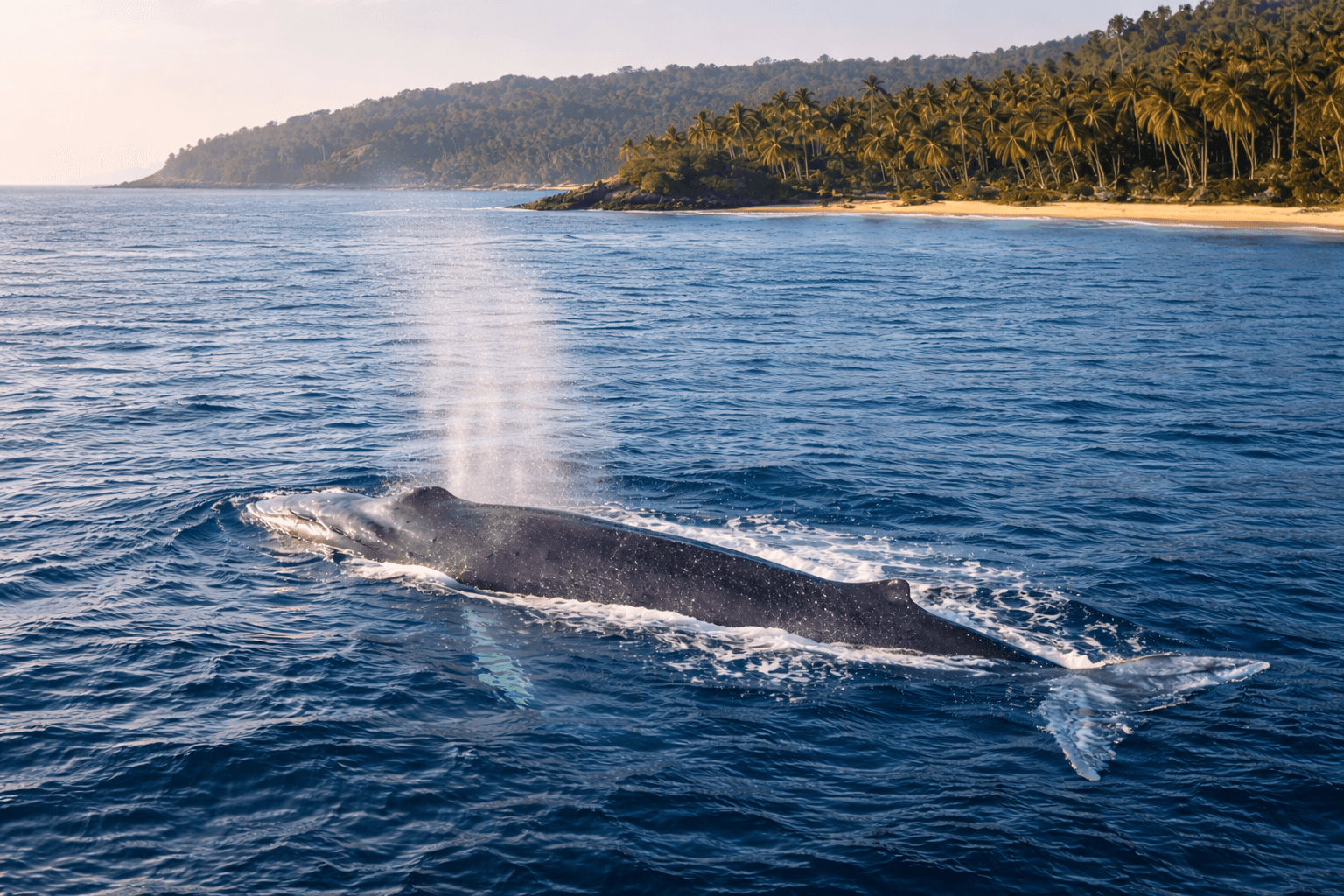
Planning a whale-watching trip in Sri Lanka? Discover the best places, best season, and what first-time visitors should know about Mirissa, Trincomalee, and Kalpitiya.
Whale watching is one of the most exciting experiences you can add to a Sri Lanka trip. It is one of those rare travel moments that feels genuinely wild. You are not looking at animals in a park or on land from a distance. You are out on the open sea, watching for movement on the horizon and hoping for that first dramatic sighting.
Sri Lanka is one of the few destinations where whale and dolphin watching can fit naturally into a broader holiday that already includes beaches, culture, wildlife, and hill country. That is one of the reasons it works so well for first-time visitors. You do not need a dedicated expedition-style trip. You can add it into the right coastal route and still keep your holiday relaxed.
Why whale watching in Sri Lanka is worth considering
The biggest appeal is simple: Sri Lanka gives travelers access to whale-watching experiences without needing a long specialist journey.
For many visitors, it adds a completely different feeling to the trip. One day you may be walking through Galle Fort or relaxing on the beach, and the next morning you are out at sea scanning for blue whales or dolphins.
It is also a very easy experience to understand when planning:
- Mirissa and the southern coast are the classic whale-watching choice
- Trincomalee works better when the east coast suits your season
- Kalpitiya is especially known for dolphins
That makes the decision much easier once you know when you are traveling.
The best places for whale watching in Sri Lanka
Mirissa and Dondra Point
If you ask most travelers where whale watching happens in Sri Lanka, the first answer is usually Mirissa.
That is for good reason. This is the most famous whale-watching base in the country, and it fits naturally into a south-coast route. If your trip already includes places like Galle, Hikkaduwa, Weligama, or Mirissa, this is usually the easiest area to add a whale-watching trip.
The general appeal of this area is not only the sightings themselves. It is also convenience. You can stay somewhere relaxed by the beach, take an early-morning boat trip, and then return to a normal holiday rhythm later in the day.
If you want the most classic and easiest whale-watching option in Sri Lanka, Mirissa is usually the first place to look at.
Trincomalee
If you are traveling during the part of the year when the east coast makes more sense, then Trincomalee becomes the smarter whale-watching option.
This works especially well for travelers building an east-coast trip around places like:
- Trincomalee
- Nilaveli
- Uppuveli
- nearby marine or beach activities
The nice thing about Trincomalee is that it can be part of a more spacious, slower beach holiday. If Mirissa feels like the better-known southern classic, Trincomalee feels a bit more seasonal and route-dependent.
For the right month, it can be a very rewarding alternative.
Kalpitiya
Kalpitiya is often mentioned more for dolphins than for whales, and that matters if the person planning the trip is happy with either experience.
If your dream is specifically blue whale watching, Mirissa and Trincomalee are usually the names people focus on first.
If you are open to a broader marine-life boat experience, Kalpitiya can still be very appealing because dolphin sightings are a major part of its reputation.
That makes it a good option for travelers who want a coastal wildlife outing without building the whole trip around whale-focused expectations.
Best season for whale watching in Sri Lanka
The most practical way to understand whale-watching season in Sri Lanka is to connect it with the coast that suits your travel month.
For Mirissa and the south coast
If you are traveling when the south-west coast is at its easier, calmer, beach-friendly time, that is usually when Mirissa makes the most sense for whale watching too.
This tends to fit best with the same season many travelers already choose for:
- Galle
- Mirissa
- Unawatuna
- Hikkaduwa
- the classic first-time Sri Lanka route
For Trincomalee and the east coast
If your trip is built around the east coast season, then Trincomalee becomes the better whale-watching base.
This is why there is no single perfect whale-watching month for the whole country.
The better question is:
Which coast suits my travel month better?
Once you know that, the whale-watching location usually becomes much easier to choose.
Mirissa vs Trincomalee: which should you choose?
A simple way to decide is this:
Choose Mirissa if:
- you are already planning a south-coast holiday
- you want the most popular whale-watching base
- you want to combine whale watching with beach towns like Galle, Weligama, or Unawatuna
- you prefer the easier classic first-time route
Choose Trincomalee if:
- you are visiting when the east coast is the stronger choice
- your route already includes Nilaveli or Trincomalee
- you want a more east-coast-focused beach holiday
- you are building a trip outside the classic south-coast season
Choose Kalpitiya if:
- you are happy with dolphin-focused marine wildlife
- you want a different coastal experience
- whales are not your only priority
What whales and dolphins might you see?
Sri Lanka’s surrounding waters are known for hosting several types of cetaceans, which is one reason the country is so attractive for marine wildlife tourism.
Depending on the location and conditions, travelers may hope for sightings such as:
- blue whales
- sperm whales
- Bryde’s whales
- fin whales
- spinner dolphins
- other dolphin species
It is important to treat this as a wildlife experience, not a guaranteed show. Some days are more active than others, and sea conditions can change the experience a lot.
That is part of the appeal, but it is also something worth being honest about in a travel article.
What time do whale-watching trips usually happen?
Most whale-watching trips are usually early-morning departures.
That means this is not the kind of activity to plan after a late night. It is better approached as a calm, early start, with the expectation that you may spend several hours on the water.
Because of that, whale watching is usually best for travelers who:
- are comfortable with boat trips
- are happy to wake up early
- do not mind some waiting
- enjoy the experience of being on the sea, not only the final sighting
What to know before booking a whale-watching trip
There are a few things first-time travelers should understand before they book.
1. This is a wildlife activity, not a guarantee
Even in strong seasons and good locations, sightings can never be fully guaranteed.
2. Sea conditions matter
A trip can feel amazing on a calm morning and much tougher on a rougher one. If someone is very prone to motion sickness, this is something to think about seriously.
3. Early departures are normal
Whale-watching trips often start early in the day, so it helps to stay relatively close to the departure point the night before.
4. Not every traveler will enjoy it equally
Some people love the open-sea experience. Others find the boat movement tiring. It is worth being realistic about your own travel style.
5. It works best when it fits your route naturally
Whale watching feels much better when it is part of an already sensible coastal itinerary, not something you force awkwardly into the middle of the trip.
Who should include whale watching in their Sri Lanka trip?
Whale watching is a strong add-on for:
- couples
- nature lovers
- photography-focused travelers
- families with older children
- travelers who already plan to spend time on the coast
It is especially good for people who enjoy the feeling of a trip having a few standout moments beyond beaches and sightseeing.
It may be less ideal for:
- travelers who dislike boats
- people with strong motion sickness
- very short trips where every half-day matters
- anyone expecting a guaranteed close-up wildlife show
How to fit whale watching into a Sri Lanka itinerary
The easiest way is to treat it as a single early-morning excursion during a coastal stay.
A few practical examples:
South-coast version
- stay in Mirissa, Weligama, or nearby
- do whale watching one morning
- spend the rest of the trip enjoying beach time or moving toward Galle
East-coast version
- stay in Trincomalee or Nilaveli
- add whale watching if the season fits
- combine it with snorkeling, beach time, or a slower east-coast itinerary
That is usually much smoother than trying to build a whole trip around only one marine activity.
My honest recommendation
If this is your first Sri Lanka trip, I would usually recommend:
- Mirissa if you are visiting in the classic south-coast season
- Trincomalee if you are traveling in the part of the year that suits the east coast
- Kalpitiya mainly if dolphins are a big part of the appeal for you
That keeps the decision practical and route-based instead of overcomplicated.
Final thoughts
Whale watching in Sri Lanka is one of the most memorable nature experiences you can add to your holiday, but it works best when approached with the right expectations.
Do not think of it as a guaranteed headline event. Think of it as a beautiful marine experience that can become one of the highlights of your trip if the season, route, and conditions all line up well.
That is usually the best mindset for planning it.
And if you build it into the right coastal itinerary, it can feel like one of the most special mornings of the entire journey.
Comments
0 totalJoin the conversation and share your travel ideas.
No comments yet. Be the first one to start the discussion.