
How to Plan a Sri Lanka Trip: Visa, Budget, SIM, Transport & Money Tips
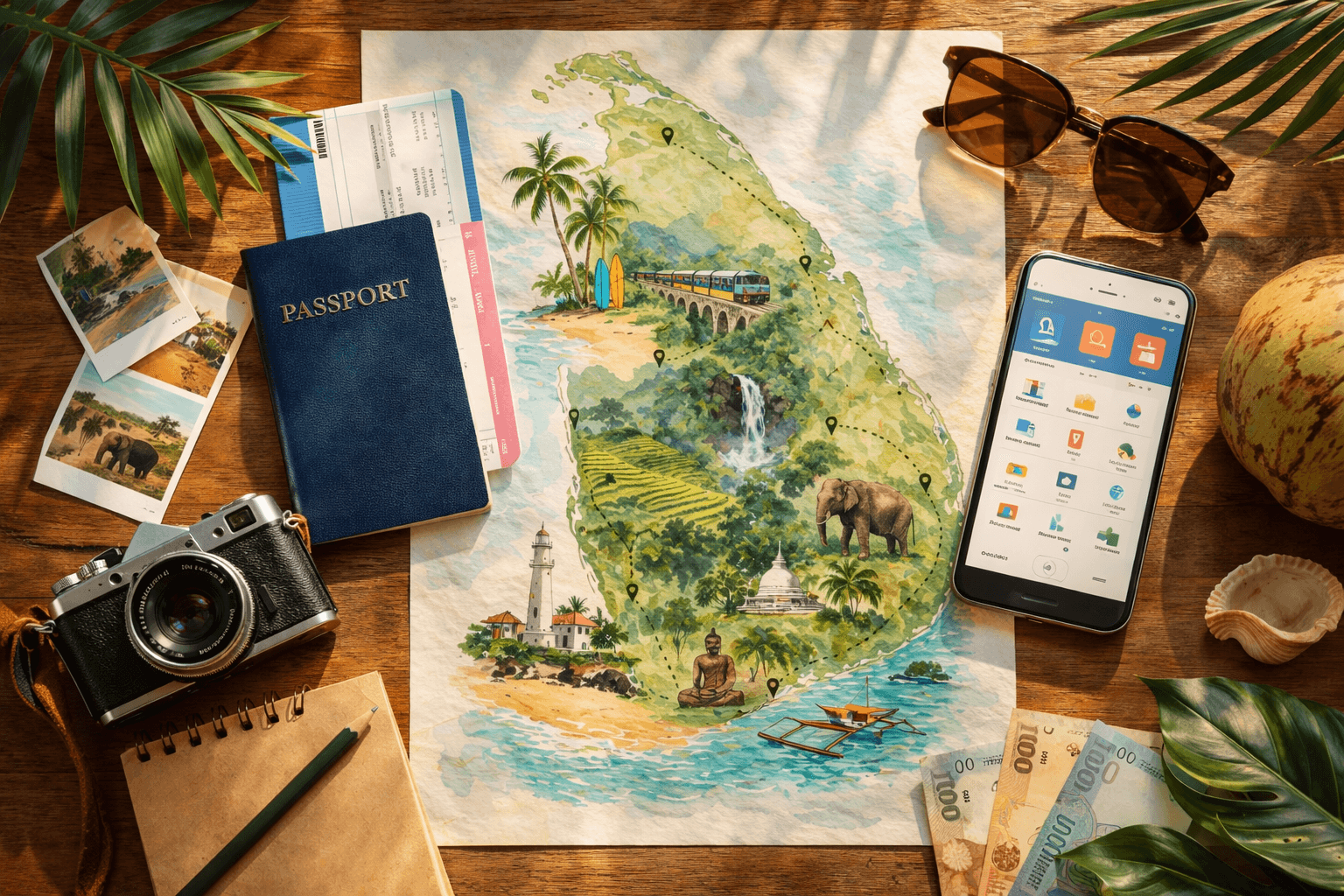
Planning a Sri Lanka holiday? Learn how to prepare your visa, budget, SIM, transport, money, and route with this simple first-time visitor guide.
Planning a Sri Lanka trip for the first time can feel easier than planning a big multi-country holiday, but it still helps to get a few basics right before you book anything. Sri Lanka Tourism positions the island as a place where you can combine natural, cultural, and historical experiences within relatively short distances, which is exactly why route planning matters so much.
The mistake many first-time visitors make is trying to fit everything into one trip. A better approach is to decide what kind of holiday you want first, then build the route around it. Do you want culture and history, hill country and scenic trains, wildlife and safari, or a slower beach holiday? Sri Lanka Tourism’s official planning pages group the trip around those same ideas: attractions, suggested itineraries, getting around, transport, travel agents, and weather.
Start with the visa first
For most short leisure visits, the first thing to check is the official Sri Lanka ETA system. The official ETA site says travelers visiting Sri Lanka for a short stay must obtain ETA prior approval before arrival, and it lists tourist ETA as a double-entry permission for 30 days. Sri Lanka Tourism’s travel tips page also warns travelers to use the official ETA channel for payment rather than third-party websites.
The safest way to explain this in your blog is simple: check the official ETA site before you book flights, confirm your eligibility, and use the official payment route. That keeps the advice useful without locking your article to a fee or rule that may change later.
Choose the right arrival plan
Bandaranaike International Airport, code CMB, is Sri Lanka’s main international airport, and the official airport page places it at Katunayake, about 30 kilometers north of Colombo. Sri Lanka Tourism’s travel tips page also notes that most visitors arrive by air and highlights the airport’s proximity to Negombo, which is why many travelers choose Negombo for their first or last night.
For most first-time visitors, that creates a simple choice. If you arrive late, stay near the airport or in Negombo and start the longer journey the next morning. If you land early and already have a driver arranged, you can head inland the same day. That one decision can make the whole trip feel either rushed or smooth.
Keep your route realistic
Sri Lanka may be compact, but it is not a place where every transfer feels short. Tourism’s “getting around” and transport pages make clear that the country is well connected by road, rail, and air, but train journeys are described as leisurely outside key fast services such as Colombo to Kandy.
That is why a smart first trip is usually built around one clear flow rather than constant zig-zagging. A classic first route might be something like Sigiriya / Dambulla → Kandy → Ella → safari → south coast, while a beach-focused route might stay mainly on one coast. The more you reduce backtracking, the better your trip usually feels.
Decide your transport style early
Sri Lanka Tourism says the island has both public and private transport services operating across road, rail, and air. Its getting-around page says trains connect Colombo with tourist towns, but also notes that journeys can be leisurely. It also links travelers to taxi operators and authorized guides and drivers.
For first-time visitors, the easiest rule is this: use private transport if comfort, time, and flexibility matter most; use trains if you want the experience and scenery; use buses only if you are traveling very lightly and do not mind slower, less predictable logistics.
If your website is selling transport and guided planning, this is a useful moment in the article to be honest rather than overly salesy. A private driver is not always necessary, but on a short first trip it often removes a lot of friction.
Think about your budget in the right way
Instead of asking, “What is the average Sri Lanka budget?”, it is usually more helpful to ask, “What will make my version of Sri Lanka more expensive?” In practice, three choices shape most trips: your transport style, your hotel level, and how many destinations you try to squeeze in.
A route with trains, guesthouses, and longer stays in fewer places usually feels more budget-friendly. A route with private transfers, higher-end hotels, and many one-night stops will naturally cost more. The important thing is not to build a luxury route and expect backpacker costs, or vice versa.
Sort your SIM and connectivity soon after landing
If staying connected matters to you, it is easy to handle soon after arrival. The official airport site lists mobile communication counters at the airport operating 24 hours, which makes it practical for travelers to arrange mobile service soon after landing.
For a first trip, the simplest advice is to arrive with an unlocked phone, keep your passport handy, and sort your mobile connection early so transport, hotel communication, and maps feel easier from day one.
Understand money before you travel
Sri Lanka Tourism’s travel tips page says the local currency is the Sri Lankan Rupee, that ATMs are widely available, and that most hotels, restaurants, and shopping centers accept credit cards. The same page also advises travelers to keep plenty of lower-denomination notes because change can be difficult for small purchases.
That usually means the most practical setup is:
- keep a bank card for ATM withdrawals
- carry some cash for smaller shops, snacks, tuk-tuks, and local stops
- do not expect every small place to handle cards as easily as a city hotel
That balance usually works better than carrying a large amount of cash from the start.
Pack for heat, hills, and temples
Sri Lanka Tourism’s travel tips page says cotton clothing works well year-round, but you may want light woollens for the hills and waterproof clothing or an umbrella depending on the season. The same page recommends modest dress when visiting religious sites and comfortable shoes for general travel.
That is one of the easiest packing mistakes to avoid. First-time visitors sometimes pack only for the beach, then arrive in the hill country and wish they had brought one light extra layer. Sri Lanka is warm, but it does not feel the same everywhere.
Be sensible with water and heat
Sri Lanka Tourism’s travel tips page says tap water is not safe to drink and recommends bottled water, ideally with the seal broken in your presence. The same page also recommends sunscreen and notes that Sri Lanka is close to the equator, which makes sun exposure stronger than some travelers expect.
This is basic advice, but it makes a difference. If you stay hydrated, use sunscreen, and do not try to power through every hot midday activity, the trip usually becomes much more enjoyable.
Use official planning tools where possible
Sri Lanka Tourism’s official planning pages point travelers toward suggested itineraries, attractions, transport, travel agents, tour guides, online services, and a tourist map. It also offers a tourism information hotline, 1912, for travelers within Sri Lanka.
That means your readers do not need to rely only on random old blogs. A good trip plan usually comes from combining official basics with a route that actually suits the traveler’s style and month of travel.
Final thoughts
A well-planned Sri Lanka trip does not need to be complicated. Start with the official ETA, choose a realistic route, decide early how you want to get around, keep your money setup simple, and pack for more than just the beach. Once those basics are sorted, the rest of the trip becomes much easier to enjoy.
Sri Lanka rewards travelers who plan with a little intention. Not because it is hard, but because it offers so much in a small space. When the route matches the season and the pace matches the trip length, the island starts to feel effortless.
Need help planning your Sri Lanka route, transport, or custom holiday?
Contact us and we’ll help you build a trip that actually fits your time and style.
Comments
0 totalJoin the conversation and share your travel ideas.
No comments yet. Be the first one to start the discussion.